
News
Romanian shepherd dogs — the guardian angels of the Carpathian flocks
Today, despite population growth, the expansion of human settlements and deforestation, Romania is home to the largest population of large carnivores in Europe (the bear, the wolf and the lynx) and ranks 4th in the world (after Russia, Canada and the U.S.A.) in terms of its brown bear population.
Within the European Union, Romania also ranks 3rd in sheep and goat farming.
Given that a large share of the sheep, goats and cattle are traditionally raised in the plateau, hill (sub-mountainous) and mountain regions — that is, in the immediate vicinity of the large carnivores — one naturally asks: how is this possible?
As we know, in our country the regime of weapons and ammunition is strictly regulated by law, so that nowhere will we see shepherds armed to the teeth, ready to kill any predator that might threaten their flocks and herds.
And yet, the flocks and herds of the Carpathians are safe and thriving, thanks to their guardian angels.
No, they have no wings and do not dwell on clouds — they have fur, a powerful voice, they are fearless and ready at any moment to fight if the situation demands it.
They are the Romanian shepherd dogs – the guardian angels of the Carpathian flocks!
But who are they? Who are these angels, who can have gentle eyes when watching over a newborn lamb or the shepherd’s child running through the sheepfold yard, yet who, in an instant, can turn into true “beasts” when someone threatens the life or the safety of what is in their care?
They are five good brothers, by their names:
- The Romanian Carpathian Shepherd Dog – with the grey coat of its ancestor, today its mortal enemy, the wolf;
- The Romanian Mioritic Shepherd Dog – with a long, white coat like the wool of the Țurcana sheep it has protected for thousands of years;
- The Romanian Bucovina Shepherd Dog – known of old as floriul, floranul, breazul and by many other names, depending on the region;
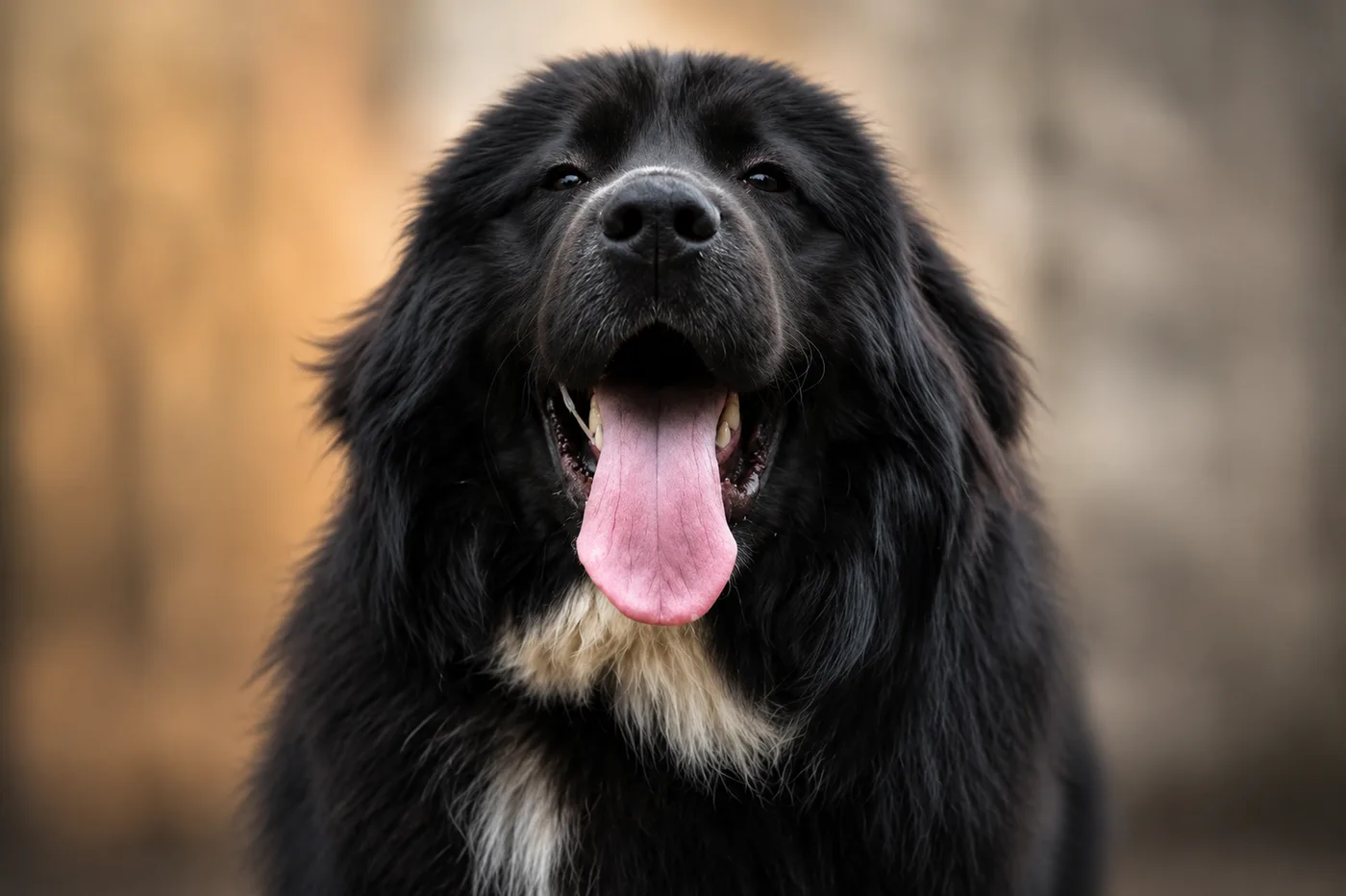
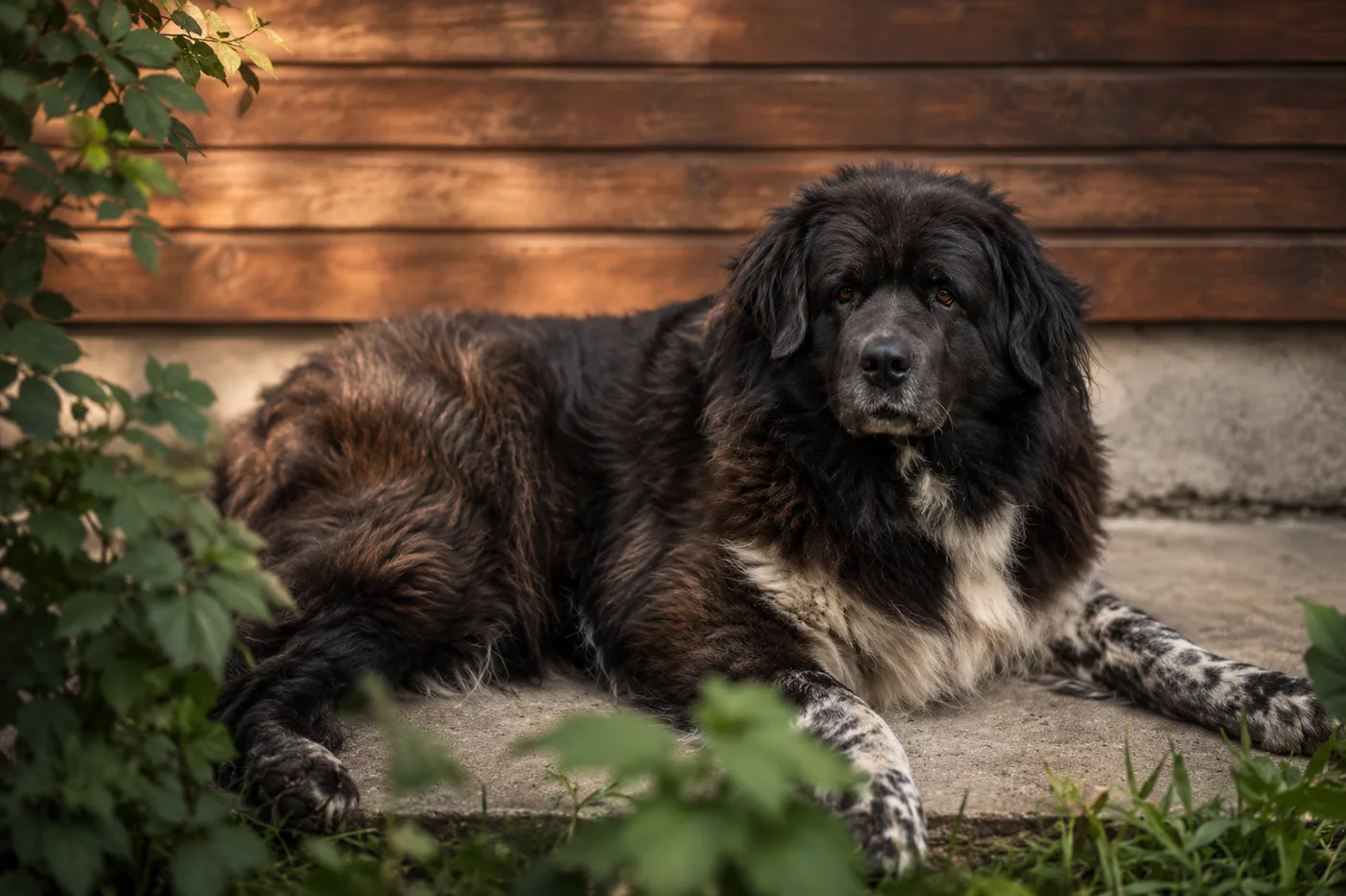
- The Romanian Corb (Raven) Shepherd Dog – blacker than the night, the dread of any enemy that tries the sheepfold at dusk;
- The Romanian Bălan Shepherd Dog – with its snow-white coat, on which it sleeps without trouble while keeping watch through the long, frosty winter nights.
Well, we have seen who these angels are — but when did they appear in these lands?
The question would require an answer far too long for this space; therefore, very briefly, we can say without a shadow of doubt that they appeared together with us, the Romanians — that they have stood beside our forebears in these lands even before the Dacians. Of course, many might dispute these claims out of ignorance, ill will, or who knows what other more or less logical reasons.
But imagine what this land looked like… let us say, 2000 years ago.
If today we still have so many forests filled with so many wild animals, if today we have the largest population of large carnivores in Europe, then how many brown bears, wolves and lynxes lived in the Carpathians 2000 years ago?
“Then (the sheep) not only satisfy the peasants with an abundance of cheese and milk, but also cover the tables of the rich with numerous and pleasant dishes. And to peoples lacking wheat they provide all their food, which is why most of the nomads and of the Getae are called ‘milk-drinkers’.” — wrote the Latin agronomist Moderati Columella in his work On Agriculture (20–70 AD).
Recalling these words, let us not forget perhaps the most important words that defined our forebears, namely those spoken by the “father of history”, Herodotus, who said that “the Getae (referring to our Geto-Dacian ancestors) are the bravest and most just of the Thracians”.
What is more, if we were to follow the example of the shepherd Badea Cârțan (called by the Italians “the Dacian who came down from the column”) and go to Rome to see Trajan’s Column, we would find that, alongside the Dacians (some of whom wear sheepskin coats on their shoulders) and the Romans, Țurcana sheep can be seen. Indeed, the very word “țurcană” is of Dacian origin, meaning “sheep”, according to Hașdeu. Likewise, if we were to visit the Monument at Adamclisi, we could see Țigaie sheep depicted — another ancient Romanian breed.
Therefore, since the Romanian sheep breeds, the Țurcana and the Țigaie, are at least 2000 years old (4000–5000 years, according to some authors), it is certain that the Geto-Dacian shepherds first, and then the Romanian ones, needed shepherd dogs to protect the flocks they raised in the Carpathian mountains. In this respect, the archaeological evidence comes into play — bones of shepherd dogs very similar in size and form to today’s Romanian shepherd dogs. Among this archaeological evidence, we may mention, by way of example, the finds at Poiana Doicești in Neamț County, those from the medieval settlement of Garvăn-Dinogetia, and those from the commune of Cetățeni, Argeș County.
And so the picture becomes complete, and we find that the Carpathian mountains have echoed for thousands of years with the powerful “barking” of the Romanian shepherd dogs — the watchmen of the mountains — in their tireless struggle with their mortal enemy: the wolf and the bear, more rarely the lynx, and increasingly often the wild boar.
The psychology of our forebears (brave and just), their millennia-old occupation (sheep farming), and the climate (temperate-continental) and relief (from plain to mountain) of our country led to the formation of some of the most beautiful, hardy, well-adapted and effective shepherd dog breeds in the world. This is why it is entirely false to put forward the idea that the Romanian shepherd dog breeds are the creation of modern cynologists, breeders of pedigreed dogs. There is only one reality, namely that the Romanian mastiff is the creation of the Geto-Dacian shepherd first, taken up by the Romanian shepherd from the most ancient times and passed down from generation to generation to this day.
This is why we have the duty to keep these dogs as we inherited them from our forefathers, without tampering with them (for the sake of financial gain, or driven by personal frustrations or other petty interests) and turning them into something entirely different from what we received from our ancestors — that is, foreign, ill-adapted, weak, frail, useless.
The Romanian shepherd dog is divided into breeds strictly by external characteristics (form, coat, colour, etc.); but as regards temperament, the Carpathian, the Mioritic, the Corb, the Bălan and the Bucovina are identical and can be characterised very simply using words such as: balanced, healthy, hardy, undemanding, intelligent, adaptable, loving, fearless, and so many more. Had it not been so, they would have perished long before our generation could have come to know them.
Throughout their history, the Romanian shepherd dogs, like us Romanians, made do with little, asked for nothing more, and their only duty, fulfilled with devotion, was to defend “their poverty and their needs and their people”.
Crossbreeding Romanian shepherd dogs with dogs belonging to other shepherd breeds (the Caucasian — most often used in this sinful “practice”, the Central Asian, the Kangal, etc.) is the greatest harm we can do to this heritage we received from our ancestors and which we have the duty to pass on to future generations unaltered, just as it is. Crossbreeding these dogs with dogs of other foreign breeds destroys not only the genetic stock of the Romanian shepherd dog breeds, but alters something even more precious — their spirit! They are “brave and just”, and under no circumstances may we allow them to become either fearful and cowardly, or deranged and bloodthirsty.
The shepherd dogs of breeds formed by other peoples are wonderful too; they have their place and can certainly be loved and raised by Romanians as well — but without leaving their “imprint” upon our national breeds.
The obsession with kilograms and centimetres can lead to the disappearance of the authentic Romanian shepherd dogs, and precisely for this reason we have the duty to educate future breeders — and, unfortunately, a good part of current breeders — about the fact that the true Romanian shepherd dog is large but not gigantic, agile and built like a Dacian warrior, not like a sumo wrestler; fearless towards enemies (two-legged or four-legged), yet gentle with the beings it loves and protects. In just a few words, it is a dog that is balanced and harmonious in every respect, and for us Romanians it is — or ought to be — the most beautiful of all dogs.
Fortunately, in Romania there are still plenty of lovers of authentic Romanian shepherd dogs; fortunately, in Romania our millennia-old occupation — sheep farming — still endures. We therefore have every reason to be confident in the survival of these breeds in our lands, all the more so since, at the cynological level too, the Royal Federal Canine Club (as the national body) and the Străjerii Munților Association (as a specialised club) are making every effort to preserve and perpetuate the authentic Romanian shepherd dogs.
I am Cosmin Neagu – a breeder of the Romanian Corb Shepherd Dog for 20 years, a judge and cynotechnician within the Royal Federal Canine Club, and the president of the Străjerii Munților Association.
I was born into a family that loved Romanian shepherd dogs, and I grew up surrounded by such dogs, which belonged to members of my family or to shepherds — relatives, neighbours or friends. Many times I wondered where this boundless passion for the Romanian sheepdog came from, but the answer came to me only on a frosty winter evening, many years ago.
While staying at my grandparents’, late at night, I heard the barking of Nora – the Carpathian of the yard. She barked long, warning that “no one passes through here”. I went outside, even though the frost urged me not to stray too far from the warmth of the stove in which the beech logs burned fiercely. I found that she was joined, to the west, by Mureș – the legendary Carpathian of our hamlet, in the yard of old Nuțel, and to the east by the then-young Dorojan, in the yard of the shepherd Doru. Authentic Romanian sheepdogs were making their presence felt. All of them, in unison, their voices turned towards the forest behind our houses. Nothing pierced the complete silence of that frosty night except the voices of these mastiffs. The wolf was prowling.
It was then that I realised I no longer had to search for the answer to my question. I am Romanian, and the love for everything that the pastoral world means — and above all for the Romanian shepherd dog, the guardian angel of the Carpathian flocks — is deeply written into my genetic code.
I cherish the hope that, years and years from now, in the silence of the frosty winter night, across the land of Romania, the voices of these angels will continue to resound.
Cosmin Neagu Breeder of the Romanian Corb Shepherd Dog · CFC–Royal judge · President of the Străjerii Munților Association